The Capuchine pigeon:

6:31 AM

The Capuchine pigeon is one of the older pigeon breeds and likely dates back to the Middle East, Greece or India for its origins. Dutch sailors probably brought Capuchines back to Holland no later than the 1500's by Dutch sailors. We know of its presence in Holland in the 1500's by its depiction in several of the Dutch Masters works of art. Imported into the United States in the 1960s, the Old Dutch Capuchine has enjoyed relative popularity as a rare breed.
Appearance is graceful, medium small size pigeon, medium high, with a horizontally carried body. Short, broad between shoulders, gradually tapering off towards the tail. The horizontal carriage is highly desired. A vertical line is dropped from the center of the eye, should locate about 30 mm in front of the leg. The head is of medium length, very well rounded. It is not "pinch faced" and broad enough at the back to be a sound base for a broad hood.


The beak is Medium in length, with slightly curved at the tip. Colors of eyes are Iris, pearl white and lively. Ceres of fine texture, red to flesh colored. The neck is of medium length. Tapering to blend smoothly into the breast and shoulders. The breast are broad and full, carried just forward of the tip of the beak when stood at attention. The throat is free from gullet, well cut back. The back is broad between the shoulders, gradually tapering off towards the rump. The wings are not too long, carried well up i.e. lying properly closed on the back and tail terminating about 1 cm from the end of the tail. The tail is short rather than long in proportion to length of body. Rather narrow and well closed.
The legs are medium in length; shanks and toes are not feathered. Legs are bright red in color. Thigh feathers not so long as to make the legs look short. The hood is upright and broad, not pinched or ‘V’ shaped, with as many feather layers as possible. Fully feathered down the back of the neck (mane) with no breaks. The mane to blend imperceptibly with the chain below the rosette. The collar (chain) is unbroken line from the hood to the lower part of the shoulders, to blend with the mane. In no case should the chain feathers from either side meet in the front. They must keep distance from the cheeks and reach up to the lower part of the eye ceres when viewed from the side. On either side of the neck there is an elliptical rosette, set as low as possible.
Capuchine pigeons are bred in monk markings with the solitary exception being white self’s. Even in tigered varieties, the monk marking should be discernible. The head is white until half to three-quarters of an inch below the beak. Also white are 7 to 12 primary flights, the tail, and the underbelly. Old Dutch Capuchines are found in a wide variety of colors such as red, yellow, black, dun, tigered, barred in blue, silver, mealy, and cream, self white, and some of the rarer colors like almond, andalusian, dominant opal, reduced, and brown.


Source:
Picture Credit | Link:
Article | Link:

Knut (polar bear)

6:27 AM


Knut  was a polar bear who was born in captivity at the Berlin Zoological Garden. Rejected by his mother at birth, he was raised by zookeepers. He was the first polar bear cub to survive past infancy at the Berlin Zoo in more than 30 years. At one time the subject of international controversy, he became a tourist attraction and commercial success. After the German tabloid newspaper Bild ran a quote from an animal rights activist that decried keeping the cub in captivity, fans worldwide rallied in support of his being hand-raised by humans. Children protested outside the zoo, and e-mails and letters expressing sympathy for the cub's life were sent from around the world.


Source:
Picture Credit | Link:
Wikipedia Article | Link:

The Gypsy Horse

1:24 PM
The Gypsy Horse


The Gypsy Horse (USA, UK, AU), also known as the Gypsy Cob (UK, NZ), Coloured Cob, Irish Cob, and Tinker Horse, is a horse breed originally developed by Romanichal peoples native to the British Isles. As recently as 1996, the Gypsy horse had no stud book or breed registry.[2] However, it is now considered a breed[2] with multiple worldwide breed associations dedicated to it. [a] It is a small draught breed, popularly recognized for its abundant leg feathering and common black and white, or "piebald", coat colour, though it can be of any other colour as well. Breeders in the U.K. compliment a good example of the breed, which has powerful muscling, correct leg conformation of a pulling horse, and flashy action, with the term "proper cob".[1] Around 1850, the Romanichal of Great Britain began to use a distinct type of horse to pull the vardoes, chimneyed living waggons, in which they had just begun to live and travel. The distinct colour and look of the modern breed were refined by the Romanichal in the period following World War II. American breeders began to import Gypsy horses and created its first registry in 1996. A related sub-type, the Drum Horse, is a larger animal of similar appearance. Today, the Gypsy horse is still bred in the UK by a number of established breeders, most of whom also exhibit and sell their horses at traditional fairs. In the United States, horse show competition for Gypsy horses is increasing each year, and several Gypsy breed registries have gained affiliate recognition with the United States Equestrian Federation (USEF) and United States Dressage Federation (USDF).

Source:
Picture | Link:
Wikipedia | Link:

Wild Cockatoos

1:21 PM
Wild Cockatoos

A cockatoo is any of the 21 species belonging to the bird family Cacatuidae, the only family in the superfamily Cacatuoidea. Along with the Psittacoidea (true parrots) and the Strigopoidea (large New Zealand parrots), they make up the order Psittaciformes (parrots). The family has a mainly Australasian distribution, ranging from the Philippines and the eastern Indonesian islands of Wallacea to New Guinea, the Solomon Islands and Australia. The name cockatoo originated from the Indonesian (Malay) name for these birds, kaka(k)tua (either from kaka "parrot" + tuwah or "older sister" from kakak "sister" + tua "old").

Source:
Picture | Link:
Wikipedia | Link:

The Siberian Husky

1:18 PM
The Siberian Husky

The Siberian Husky  is a medium to large, dense-coat working dog breed that originated in north-eastern Siberia. The breed belongs to the Spitz genetic family. It is recognizable by its thickly furred double coat, sickle tail, erect triangular ears, and distinctive markings. Huskies are an active, energetic, and resilient breed whose ancestors came from the extremely cold and harsh environment of the Siberian Arctic. Siberian Huskies were bred by the Chukchi of Northeastern Asia to pull heavy loads long distances through difficult conditions. The dogs were imported into Alaska during the Nome Gold Rush and later spread into the United States and Canada. They were initially sent to Alaska and Canada as sled dogs but rapidly acquired the status of family pets and show dogs. Because of their efficiency as a working breed, most huskies are bred to be able to withstand long work days on little amounts of food.

Source:
Picture | Link:
Wikipedia | Link:

Australian shepherd

1:16 PM
 Australian shepherd

The Australian shepherd, commonly known as an Aussie, is a breed of dog that was developed on ranches in the western United States. Despite its name, the breed was not developed in Australia, but rather in the United States where they were seen in the West as early as the 1800s.[3][4][5] The breed rose gradually in popularity with the boom of western riding after World War I. They became known to the general public through rodeos, horse shows, and Disney movies made for television.


Source:
Picture | Link:
Wikipedia | Link:

The white tiger...

1:11 PM
The white tiger , State of Rewa:


The white tiger is a rare pigmentation variant of the Bengal tiger, which is reported in the wild from time to time in Assam, Bengal, Bihar and especially in the former State of Rewa.White tigers are distinct for the normal colouration in that they lack the pheomelanin pigment that in normal tigers produces the orange colour. They still produce the pigment, eumelanin, and hence are not considered albino. Compared to normal tigers without the white gene, white tigers tend to be somewhat bigger, both at birth and as fully grown adults.[2] Kailash Sankhala, the director of the New Delhi Zoo in the 1960s, said "one of the functions of the white gene may have been to keep a size gene in the population, in case it's ever needed."[3] Dark-striped white individuals are well-documented in the Bengal Tiger subspecies, also known as the Royal Bengal or Indian tiger (Panthera tigris tigris or P. t. bengalensis), and may also have occurred in captive Siberian Tigers[citation needed] (Panthera tigris altaica), as well as having been reported historically in several other subspecies.[citation needed] Currently, several hundred white tigers are in captivity worldwide, with about one hundred being found in India. Nevertheless, their population is on the increase.

Source:
Picture | Link:
Wikipedia | Link:

The American Kestrel:

11:17 AM

The American Kestrel , sometimes colloquially known as the Sparrow Hawk, is a small falcon, and the only kestrel found in the Americas. It is the most common falcon in North America, and is found in a wide variety of habitats. At 19–21 cm (7–8 in) long, it is also the smallest falcon in North America. It exhibits sexual dimorphism in size and plumage, although both sexes have a rufous back with noticeable barring. Juveniles are similar in plumage to adults.

Source:
Picture | Link:
Wikipedia | Link:

The Australian shepherd:

11:16 AM
The Australian shepherd:

The Australian shepherd, commonly known as an Aussie, is a breed of dog that was developed on ranches in the western United States. Despite its name, the breed was not developed in Australia, but rather in the United States where they were seen in the West as early as the 1800s. The breed rose gradually in popularity with the boom of western riding after World War I. They became known to the general public through rodeos, horse shows, and Disney movies made for television.


Source:
Picture | Link:
Wikipedia | Link:

The Snowy Owl:

2:58 AM
The Snowy Owl:

The Snowy Owl  is a large owl of the typical owl family Strigidae. The Snowy Owl was first classified in 1758 by Carolus Linnaeus, the Swedish naturalist who developed binomial nomenclature to classify and organize plants and animals. Until recently, it was regarded as the sole member of a distinct genus, as Nyctea scandiaca, but mtDNA cytochrome b sequence data (Olsen et al. 2002) shows that it is very closely related to the horned owls in the genus Bubo. However the recent view is to treat the species as a member of genus Nyctea.[2] The Snowy Owl is the official bird of the Canadian province of Quebec. It is also widely sought after by birdwatchers and nature-enthusiasts alike.

Source:
Picture | Link:
Wikipedia | Link:

The Quokka

2:56 AM

The Quokka

The quokka , the only member of the genus Setonix, known locally as the Kangaroo Rat, is a small macropod about the size of a domestic cat. Like other marsupials in the macropod family (such as the kangaroos and wallabies), the quokka is herbivorous and mainly nocturnal. It can be found on some smaller islands off the coast of Western Australia, in particular on Rottnest Island just off Perth and Bald Island near Albany. A small mainland colony exists in the protected area of Two Peoples Bay Nature Reserve, where they co-exist with Gilbert's potoroo.

Source:
Picture | Link:
Wikipedia | Link:

The Acorn Woodpecker

2:50 AM
The Acorn Woodpecker

The Acorn Woodpecker (Melanerpes formicivorus) is a medium-sized woodpecker.The adult Acorn Woodpecker has a brownish-black head, back, wings and tail, white forehead, throat, belly and rump. The eyes are white. There is a small part on the small of their backs were there are some green feathers. The adult male has a red cap starting at the forehead, whereas females have a black area between the forehead and the cap. The white neck, throat, and forehead patches are distinctive identifiers. When flying, they take a few flaps of their wings and drop a foot or so. White circles on their wings are visible when in flight. Acorn Woodpeckers have a call that is almost like they are laughing.

Source:
Picture | Link:
Wikipedia | Link:

The Australian Cattle Dog:

2:47 AM
The Australian Cattle Dog:

The Australian Cattle Dog (ACD or Cattle Dog), is a breed of herding dog originally developed in Australia for driving cattle over long distances across rough terrain. In the 19th century, New South Wales cattle farmer Thomas Hall crossed the dogs used by drovers in his parents' home county, Northumberland, with dingoes he had tamed. The resulting dogs were known as Halls Heelers. After Hall's death in 1870, the dogs became available beyond the Hall family and their associates, and were subsequently developed into two modern breeds, the Australian Cattle Dog and the Australian Stumpy Tail Cattle Dog. Robert Kaleski was influential in the Cattle Dog's early development, and wrote the first standard for the breed.


Source:
Picture | Link:
Wikipedia | Link:


The Purple-crowned Lorikee:

2:43 AM


The Purple-crowned Lorikeet, Glossopsitta porphyrocephala, (also known as the Porphyry-crowned Lorikeet, Zit Parrot, Blue-crowned Lorikeet, Purple-capped Lorikeet Lory, Lorikeet, and Purple-capped Parakeet) is a lorikeet found in scrub and mallee of southern Australia. It is a small lorikeet distinguished by a purple crown, an orange forehead and ear-coverts, and a light blue chin and chest.

Source:
Picture | Link:
Wikipedia | Link:

Shepherd Dog:

2:41 AM
Shepherd Dog:

A shepherd dog (also known as sheep dog or sheepdog) is a type of working dog used by shepherds to herd and/or protect their flocks. The expression may refer to distinct breeds that are recognised by Kennel Clubs, and it may also describe non-purebred types of dogs that are used by shepherds for these purposes.

Source:
Picture | Link:
Wikipedia | Link:

The Red Panda:

2:37 AM
The Red Panda:


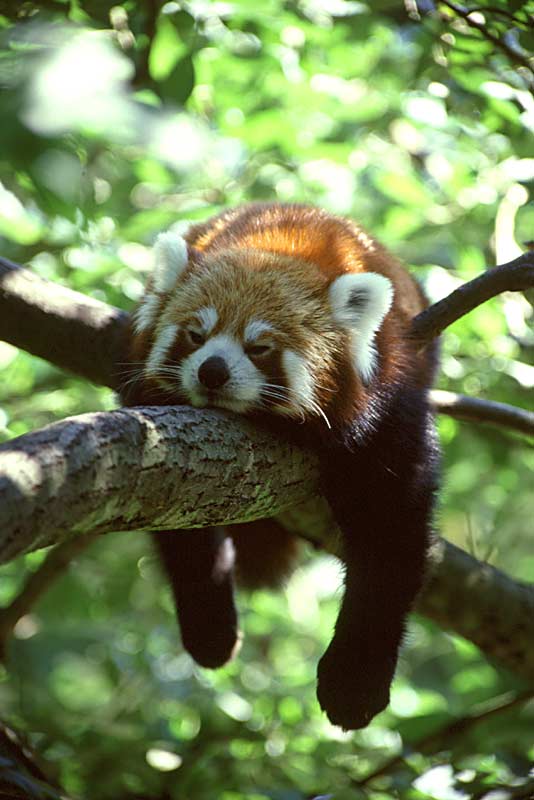
The red panda (Ailurus fulgens), also called lesser panda and red cat-bear, is a small arboreal mammal native to the eastern Himalayas and southwestern China that has been classified as Vulnerable by IUCN as its wild population is estimated at less than 10,000 mature individuals. The population continues to decline and is threatened by habitat loss and fragmentation, poaching, and inbreeding depression, although red pandas are protected by national laws in their range countries.

Source:
Picture | Link:
Wikipedia | Link:

The Angora rabbit.

9:55 AM

The Angora rabbit (Turkish: Ankara tavşanı) is a variety of domestic rabbit bred for its long, soft wool. The Angora is one of the oldest types of domestic rabbit, originating in Ankara (historically known as Angora), Turkey, along with the Angora cat and Angora goat. The rabbits were popular pets with French royalty in the mid-18th century, and spread to other parts of Europe by the end of the century. They first appeared in the United States in the early 20th century. They are bred largely for their long Angora wool, which may be removed by shearing, combing, or plucking. There are many individual breeds of Angora rabbits, four of which are recognized by American Rabbit Breeders' Association (ARBA); they are English, French, Giant, and Satin. Other breeds include German, Chinese, Swiss, Finnish, Korean, and St. Lucian.

Source:
Picture | Link:
Wikipedia | Link:

About Us

Recent

Random