Showing posts with label mammals. Show all posts

The fennec fox are loving

8:15 PM

The fennec fox or fennec is a small nocturnal fox found in the Sahara of North Africa. Its most distinctive feature is its unusually large ears, which serve to dissipate heat. Its name comes from the Arabic word (fanak), which means fox, and the species name zerda comes from the Greek word xeros which means dry, referring to the fox's habitat.
source
pic link:
info link:

The gaur

4:40 PM

The gaur also called Indian bison, is the largest extant bovine and is native to South Asia and Southeast Asia. The species is listed as vulnerable on the IUCN Red List since 1986, as the population decline in parts of the species' range is likely to be well over 70% during the last three generations. Population trends are stable in well-protected areas, and are rebuilding in a few areas which had been neglected.

source
pic link
info link:

The Indian rhinoceros

10:53 AM

The Indian rhinoceros also called the greater one-horned rhinoceros and Indian one-horned rhinoceros, belongs to the Rhinocerotidae family. Listed as a vulnerable species, the large mammal is primarily found in north-eastern India's Assam and in protected areas in the Terai of Nepal, where populations are confined to the riverine grasslands in the foothills of the Himalayas.
source
pic link:
info link:

The blackbuck

10:44 AM
The blackbuck is an ungulate species of antelope native to the Indian subcontinent that has been classified as near threatened by IUCN since 2003, as its range has decreased sharply during the 20th century. The native population is stable, with an estimated 50,000 individuals
source
pic link:
info link:

The snow leopard

8:24 PM

The snow leopard  is a large cat native to the mountain ranges of Central and South Asia. It is listed as endangered on the IUCN Red List of Threatened Species because as of 2003, the size of the global population was estimated at 4,080-6,590 adults, of which fewer than 2,500 individuals may reproduce in the wild
source
pic link:
wiki link:

The Alpine Dachsbracke dog

8:35 AM

The Alpine Dachsbracke  is a small breed of dog of the scent hound type originating in Austria. The Alpine Dachsbracke was bred to track wounded deer as well as boar, hare, and fox. It is highly efficient at following a trail even after it has gone cold. The Alpine Dachsbracke is very sturdy, and Austria is said to be the country of origin.
source
pic link:
wiki link:

The Alaskan Klee Kai dog

8:26 AM

The Alaskan Klee Kai is a spitz type breed of dog, developed in the 1970s to create a companion sized dog resembling the Alaskan Husky (a mixed breed of dog used for sled racing). It is an energetic, intelligent, apartment-sized dog with an appearance that reflects its northern heritage
source
pic link:
wiki link:

The Akita dog

8:52 AM

The Akita  is a large spitz breed of dog originating from the mountainous northern regions of Japan. There are two separate varieties of Akita: a Japanese strain, known as the "Akita Inu" or "Japanese Akita"; and an American strain, known as the "Akita" or "American Akita".The Japanese strain comes in a small choice of colors, with all other colors considered atypical of the breed, while the American strain comes in all dog colors
source
pic link:
info link:

The Akbash Dog

8:42 AM

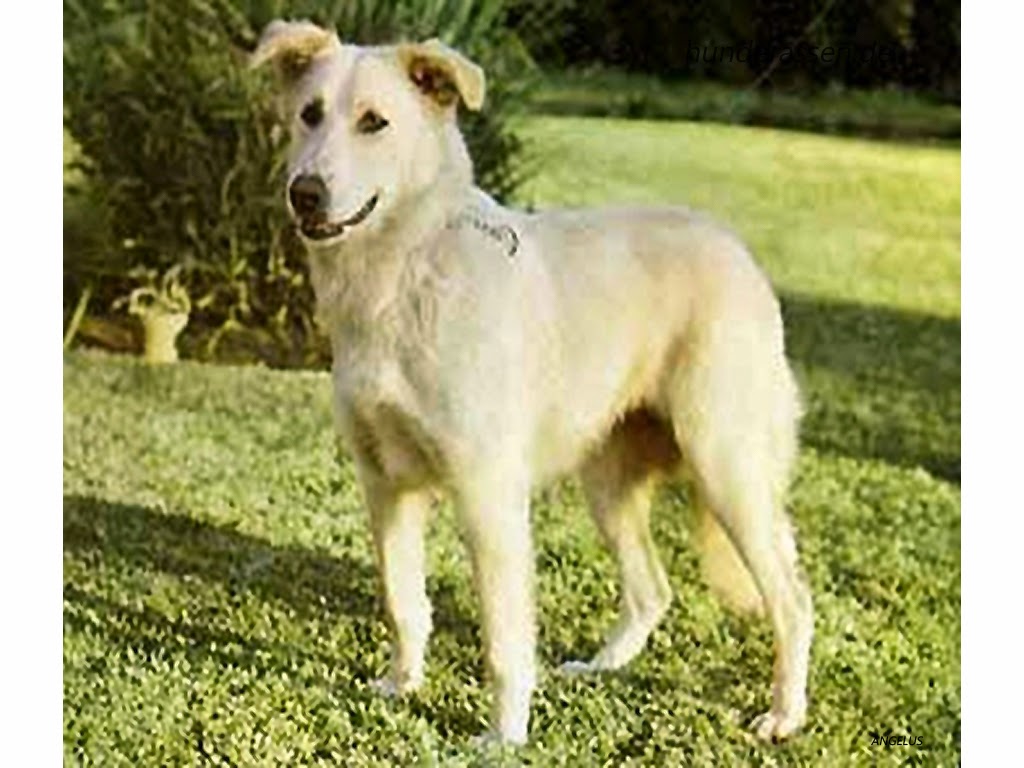
The Akbash Dog (from Turkish: Akbaş, literally "white head"  is native to western Turkey in the region known as the Akbaş, and it is primarily used as a livestock guardian dog, but is also recorded to be used as a shepherd dog
source
pic link:
info link:

The Airedale Terrier

5:58 PM

The Airedale Terrier is a breed of the terrier type that originated in Airedale, a geographic area in Yorkshire, England. It is traditionally called the "King of Terriers" because it is the largest of the terrier breeds. Bred from a Welsh Terrier and an Otterhound, the breed has also been called the Waterside Terrier, because it was bred originally to hunt otters in and around the valleys of the River Aire which runs through Airedale. In the United Kingdom this breed has also been used as a police dog.

source
pic link:
info link:

The Aidi dog

5:54 PM

The Aidi or Chien de l'Atlas is a Moroccan dog breed used as a livestock guardian, protecting herds of sheep and goats. It also possesses hunting capabilities and good scenting ability. In its native Morocco it is often paired in hunting with the Sloughi, which chases down prey that the Aidi has located by scent.

source
pic link:
info link:

Sage Kuchi dog

5:50 PM
Sage Kuchi or Sage Jangi is the standard Persian name, and the Pashto name is De Kochyano Spai or Jangi Spai, meaning "Dog of the nomads" and "Fighter Dog". It is found around the central and northern parts of Afghanistan, Pakistan and the surrounding regions in Central Asia. This Mountain dog shares similar genetic background to the Central Asian Ovtcharka (CAO).
source
pic link:
info link:

The Afghan Hound

5:44 PM

The Afghan Hound is a hound that is one of the oldest dog breeds in existence. Distinguished by its thick, fine, silky coat and its tail with a ring curl at the end, the breed acquired its unique features in the cold mountains of Afghanistan Other alternate names for this breed are Kuchi Hound, Tāzī, Balkh Hound, Baluchi Hound, Barutzy Hound, Shalgar Hound, Kabul Hound, Galanday Hound, or sometimes incorrectly African Hound.
source
pic link:
info link:

The kangaroo

5:34 PM

Kangaroos have large, powerful hind legs, large feet adapted for leaping, a long muscular tail for balance, and a small head. Like most marsupials, female kangaroos have a pouch called a marsupium in which joeys complete postnatal development.
source
pic link:
info link:
The grizzly bear

8:46 AM

The grizzly bear is any North American subspecies of the brown bear, including the mainland grizzly (Ursus arctos horribilis), the Kodiak bear , the peninsular grizzly (Ursus arctos gyas) and the recently extinct California grizzly (U. a. californicus) and Mexican grizzly bear (U. a. nelsoni). Specialists sometimes call the grizzly the North American brown bear because the grizzly and the brown bear are one species on two continents. In some places, the grizzly is nicknamed the silvertip bear for the silvery, grizzled sheen in its fur
source
pic link:
info link:

The Collie

8:24 AM

The Collie is a distinctive type of herding dog, including many related landraces and formal breeds. It originates in Scotland and Northern England. It is a medium-sized, fairly lightly built dog with a pointed snout, and many types have a distinctive white pattern over the shoulders. Collies are very active and agile, and most types have a very strong herding instinct. The collie type has spread through many parts of the world (especially Australia and North America) and has diversified into many varieties, sometimes with mixture from other dog types. Some of the collie types have remained as working dogs, used for herding cattle, sheep and other livestock, while others are kept as pets, show dogs or for dog sports, in which they display great agility, stamina and trainability. While the AKC does have a breed they call "Collie", the truth in fact is that collie dogs are a distinctive type of herding dog including many related landraces and formal breeds. There are usually major distinctions between show dogs and those bred for herding trials or dog sports. They typically display great agility, stamina and trainability and more importantly sagacity.

source
pic link:
info link:

The Shetland Sheepdog,

8:15 AM

The Shetland Sheepdog, often known as the Sheltie, is a breed of herding dog. They are small to medium dogs, and come in a variety of colors, such as sable, tri-color, and blue merle. They are vocal, excitable, energetic dogs who are always willing to please and work hard. They are partly derived from dogs used in the Shetland Isles for herding and protecting sheep. The breed was formally recognized by The Kennel Club in 1909.The Shetland Sheepdog's early history is not well known. Although of obscure origin, the sheltie is probably a descendant of small specimens of the Scottish collie and the King Charles spaniel. It was developed to tend the diminutive sheep of the Shetland Islands, whose rugged, stormy shores have produced other small-statured animals such as the Shetland pony. Today it is raised as a farm dog and family pet.
source
pic link:
info link:

About Us

Recent

Random